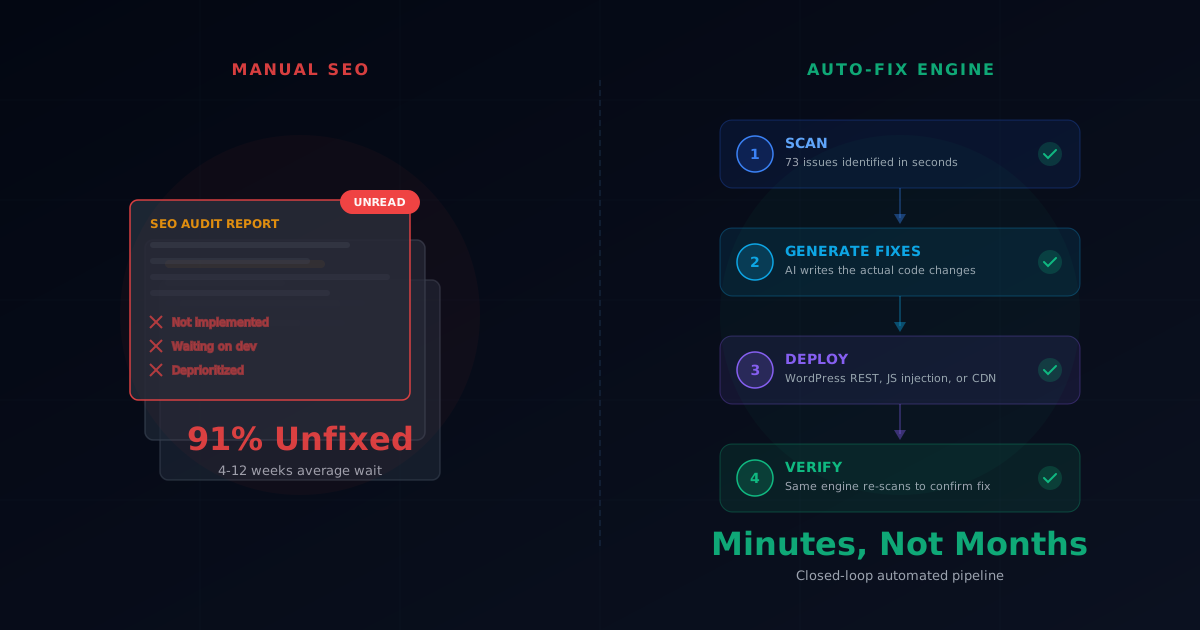
The Gap Between a Finding and a Site Effect
An SEO audit can identify a real issue without changing the site. Agencies may deliver reports, consultants may present recommendations, and internal teams may file tickets; each workflow still needs an authorized implementation step.
The useful distinction is not report count versus fix count. It is whether a finding became an approved revision, whether a capable connector accepted it, and whether an independent reread observed the intended public response.
Implementation can become a bottleneck after diagnosis. A supported finding may still wait on factual review, authorization, a developer, a capable connector, or a planning decision. ClickRadius does not publish an implementation-rate statistic, because we have no retained study that would support one.
A recommendation can be technically sound and still remain unapplied. The operational question is whether someone reviewed it, approved the exact revision, established authority over the destination, and recorded what happened after delivery.
Where Manual Implementation Can Stall
The gap between recommendation and implementation can occur at several handoffs. The examples below are workflow risks, not a claim that every organization encounters every one.
The Developer Queue
Some SEO fixes require code or configuration changes. Adding applicable schema markup, restructuring heading hierarchies, implementing security headers, fixing canonical tags, and changing image attributes may therefore enter a developer or platform-administration queue.
The time from an SEO recommendation being identified to its first deployment depends on a developer queue rather than on the audit, and enterprise clients with formal sprint planning often see critical schema issues sit in backlog. We do not publish an average, because we have no retained study that would support one.
The Translation Gap
Specialist terms such as "canonicalization conflict," "hreflang implementation error," and "crawl budget optimization" may not identify the exact revision, destination, authority, or acceptance test an implementer needs. Translation into a reviewable change is a separate step.
The Prioritization Paralysis
An audit can surface findings across schema, metadata, content, technical performance, security, and accessibility. Sequencing then requires evidence, severity, eligibility, dependencies, and business context; an unsupported impact projection should not decide that order.
The Verification Vacuum
Delivery alone does not establish a public effect. Schema can fail validation, a metadata change can be overwritten by a CMS template, and a redirect can introduce another hop. A retained provider receipt and a separate public-origin reread make the observed state inspectable; neither proves indexing or an external-engine outcome.
A report, an approved revision, provider delivery, public readback, and an external outcome are different states. Evidence should show which state was actually reached.
A Manual Implementation Sequence
A manual workflow commonly contains the following stages. This is a process illustration, not a measured industry timeline or implementation-rate benchmark:
- Audit: A tool records findings and supporting evidence.
- Review: A responsible person decides which findings are factually correct and eligible.
- Authorize: The customer or agency grants the exact authority required for a site effect.
- Implement: A developer or a proven capable connector applies the approved revision.
- Observe: A separate check records whether the intended change is present at the public origin where that instrument can see it.
This sequence is not evidence of failure. It identifies the human and technical decisions between a finding and an observed site effect.
How Auto-Fix Changes the Equation
ClickRadius connects these states without erasing their boundaries. It can prepare an eligible correction, and can apply a supported site effect only with current authorization and a capable connection; otherwise the correction remains for review or customer implementation.
ClickRadius implements this through a patent-pending workflow that records findings, approved revisions, provider receipts and public-origin rereads separately. An unavailable or unobservable check remains unknown; it is not converted into a successful verification.
The Auto-Fix Pipeline
Here is the governed process:
- Measure: The Scan Engine records findings from the public response and other supported evidence sources.
- Prepare: The Auto-Fix Engine prepares an eligible candidate revision for a supported finding.
- Authorize and apply: A supported site effect can proceed only with current authorization and a capable connection; otherwise it remains for review or customer implementation.
- Record and reread: ClickRadius records the provider receipt separately from an independent public-origin reread. A client-side snippet effect remains unverified by that raw-response instrument.
Completion time varies with review, authorization, connector capability, provider response and reread availability. ClickRadius does not publish a universal time-to-effect claim.
The product is the traceable workflow: a finding is not an approval, approval is not provider delivery, and provider delivery is not public or external-engine observation.
The Evidence-Loop Advantage
The important architectural detail is that ClickRadius retains separate evidence for the measured finding, approved revision, provider response and later public-origin observation.
In one manual workflow, an SEO specialist identifies an issue, a developer implements a revision, and a separate instrument or person checks the result. Each handoff needs an exact record so that a prepared change is not confused with a delivered or observed one.
A score change can describe a measured input, but it does not prove that an external engine observed the revision or that the revision caused a citation, traffic or revenue outcome. The public-origin reread asks the narrower question it can actually answer: was the intended supported change present in the fetched response?
What the Preparation Layer Can Cover
Current preparation and effect paths are narrower than the audit categories. They include:
- Homepage business schema: the current generator can prepare one applicable, fact-authorized
Organizationor more specific business node. Unconfirmed template-derived service, FAQ, breadcrumb, or rating claims are withheld. - Homepage metadata: a separate fact-authorized path prepares an exact title and description package. It does not claim Open Graph, Twitter Card, canonical, or site-wide metadata delivery.
- First-party content: eligible blog and knowledge articles can enter the governed publication workflow with their approved facts, author, and sources.
- Other findings: webpage, crawler-access, security, and broader technical recommendations may be reported or prepared for review. Their category setting is advisory until the specific effect path enforces authority, capability, delivery, readback, and rollback requirements.
Why State Separation Matters for AI-Answer Work
AI-answer interfaces do not reduce every observation to "cited or invisible." A sampled response may mention a business without a link, cite a source without recommending the business, show several options, or return no usable answer. The implementation-gap guide therefore keeps site effects and external observations separate.
Structured data quality, entity consistency, content evidence and crawler access are controllable inputs. Correcting them can improve the public evidence available to an engine, but it does not guarantee when or whether an engine will crawl, index, retrieve, rank or cite the site. Copilot is not currently supported by ClickRadius monitoring.
The Cost Equation
Preparing repetitive corrections in a structured workflow can reduce coordination work. Actual cost and time still depend on the site's technology, the number and type of eligible findings, review needs, connector capability and any customer implementation required.
ClickRadius does not claim that every issue has zero marginal cost or that every finding can be executed automatically. Unsupported or unauthorized work remains for review or customer implementation.
What Stays Manual
Automation is not a replacement for factual review, content strategy, brand positioning, relationship-based authority work, approval or accountability. It can prepare eligible mechanical corrections and, where currently authorized over a capable connection, apply a supported effect.
Get your free AI Readiness Score to measure the five evidence families and review supported findings. Eligible corrections can be prepared; applying a site effect requires current authorization and a capable connection, and external outcomes remain decisions of the external engines.